NASA’s 15 October records add dated satellite evidence that fires and smoke intensified across the central and eastern Amazon from September 2026, with heavy smoke visible over Manaus on 12 October. The same record also shows why readers should be careful: the imagery is strong evidence of timing and spread, not a full causal or health account.
W3C spent 7–8 October 2026 making two different cases about barcode-based Verifiable Credentials: first that they can blunt stolen-ID reuse, then that they bring real privacy, availability and trust risks. Read together, the records support a narrower conclusion than the advocacy suggests.
A Commission notice updated on 9 October 2026 says the Scientific Panel examined recent loss-of-control incidents and helped draft questions for developers. The step shows incident-focused use of the panel, but not disclosed enforcement or new binding rules.
A 7 October 2026 W3C press release casts Verifiable Credential Barcodes as an urgent answer to stolen driver's-license images. The standards show a plausible technical path for signed, revocable barcodes, but the public record retrieved here does not independently confirm W3C's California deployment claim or any measured fraud outcome.
The International Telecommunication Union now has a 2026 handbook page consolidating how meteorological and Earth-observation systems use radio spectrum. That is a concrete policy tool, but the source record here does not show any new binding allocation or confirmed post-seminar outcome.
NIST has moved its agentic AI identity project from a concept-paper debate to a planned DevSecOps demonstration. The public record shows a concrete implementation path, but not a completed demo, published draft architecture or consensus on how agent identity should work.
A new W3C draft gives Verifiable Credentials teams concrete numbers and formats for status checks, not just a placeholder for revocation. That matters because a separate W3C threat model and recent NIST token guidance both push implementers toward lifecycle controls while leaving deployment proof unsettled.
Speaking by video link to a London seminar, Sheikh Hasina’s former adviser raised concerns over political detentions and the Awami League’s exclusion, while warning of economic and security risks.
NIST’s finalized IR 8587 gives agencies and cloud providers a clearer brief on token misuse, revocation and sharing signals, key handling, and high-level AI and post-quantum considerations. The available records support a checklist of questions, not a new universal mandate or proof of deployment outcomes.
On September 18, 2026, NIST named nine RAMPS cooperative agreements totaling more than $1.7 million. The records show matched local workforce projects with two-year goals, but not yet disbursements, employer hiring, or measured outcomes.
The European Commission has moved from broad Apply AI planning to three named generative-AI pilots for public administrations and a calendar of implementation events. That is a real operational shift, but the current record still does not prove procurement wins, wide deployment or service impact.
NASA’s September 21 melt-season account and its April 3 Barents Sea report describe different Arctic ice measurements, time windows and spatial scales. Read together, they caution against treating a stable duration metric as proof of recovery or a March maximum as a direct rebuttal.
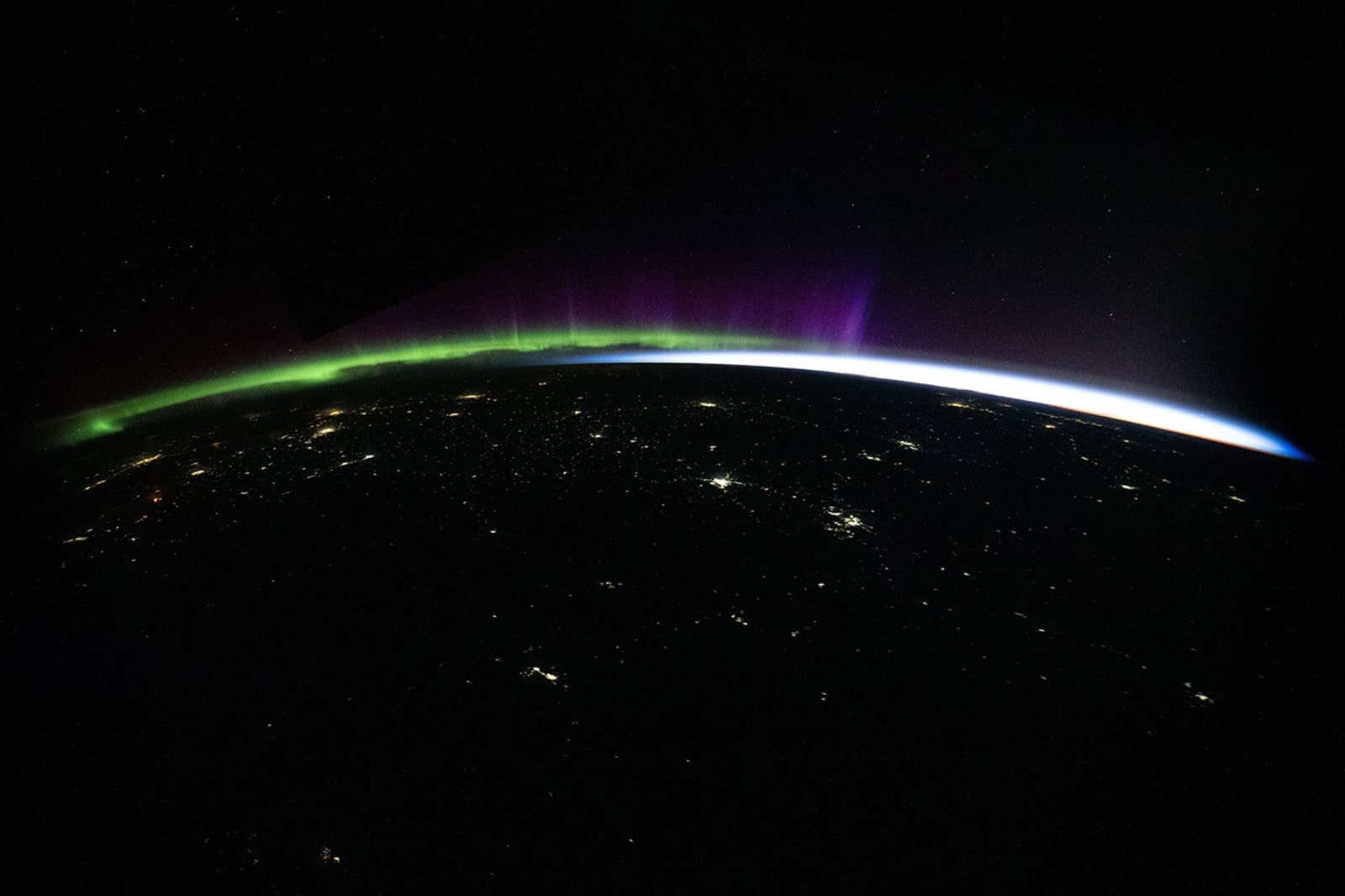
NASA’s September 16 aurora post is a useful reminder that color is evidence, but not a complete atmospheric readout. It can suggest which gases emitted light, while storm strength, magnetic changes and particle activity come from other observations.
NASA’s August 4, 2026 Webb post spotlights a counterintuitive tool: a seven-hole mask that blocks most incoming light. The point is not more photons, but cleaner angular information when bright features sit very close together.
W3C’s September 2026 WCAG 3 draft separates partial accessibility reporting from its proposed conformance threshold. That matters because a lower tier could describe real progress, while only the proposed Tier 3 would count as full conformance in the current draft model.
NIST’s June 2026 library release uses several different counts at once: chemical identities, spectra and replicate spectra. Reading those units carefully explains how a library can grow by adding new compounds, extra measured records for existing compounds, or both.
NASA’s 2026-09-15 Roman update showed the mission’s primary camera had started seeing stars. But the same record says the detector array was still far from best focus, making the image a commissioning baseline rather than a finished science view.
W3C’s new Profiles Vocabulary can describe a specification profile and link resources such as schemas or validation tools. That matters for discovery, but the source record does not show any dataset being tested or passing, and the draft leaves conformance rules to individual communities.
NIST’s August 2026 detector result shows a larger superconducting single-photon detector geometry. It does not, by itself, establish the efficiency, timing or finished-camera claims that readers may be tempted to infer from older NIST background material.
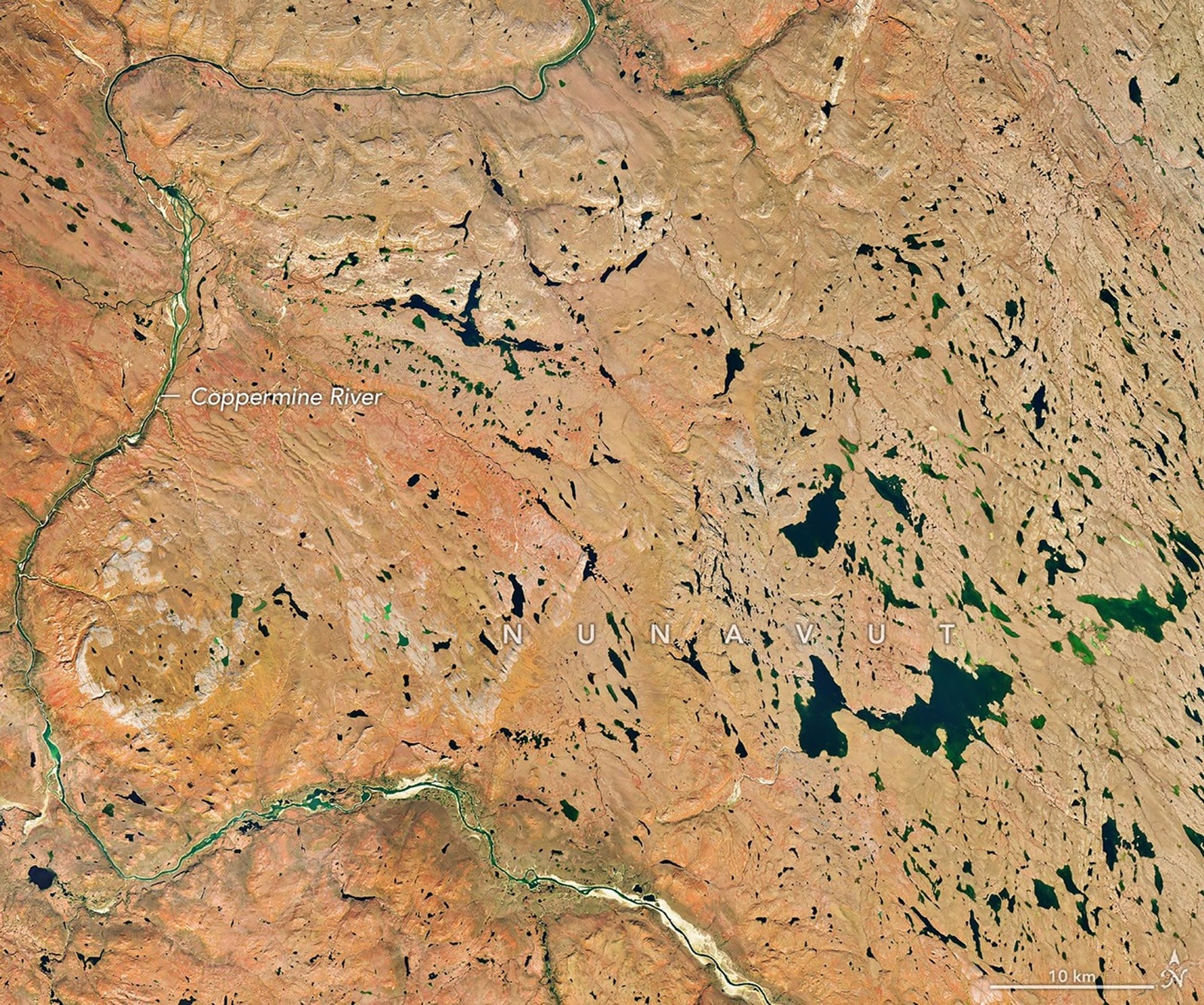
NASA’s September 14, 2026 Coppermine River image pair shows a visible seasonal change between July 27 and September 6. That does not make it a vegetation-index result: NDVI and EVI require near-infrared data and calculations the page does not provide.
W3C’s September 16 open-source pilot brings the Can I VC dashboard into an experimental support program. The useful distinction is what such a dashboard can test in software, and what it cannot decide about a credential’s truth or fitness for a real-world use.
Level 4 entered public review after Level 3 became a W3C Recommendation. The dates describe document status; product-support claims need separate evidence.
NIST’s 2025 Cold Atom Thermometer looks counterintuitive because its rubidium atoms are cooled to about 0.5 millikelvin. The key distinction is that the cooling prepares a cleaner sensor, while the reported temperature comes from blackbody radiation in the surrounding environment.