On 2026-09-10, W3C published a Working Draft of WCAG 3.0 that says it updates conformance and allows several reporting tiers for formal claims, reflecting differences in digital content and in the testing performed. That is a meaningful change in how accessibility work might be described. It is not a finished rulebook: the status section says the draft does not imply W3C endorsement and may be updated, replaced, or obsoleted. Working Draft WAI introduction summary
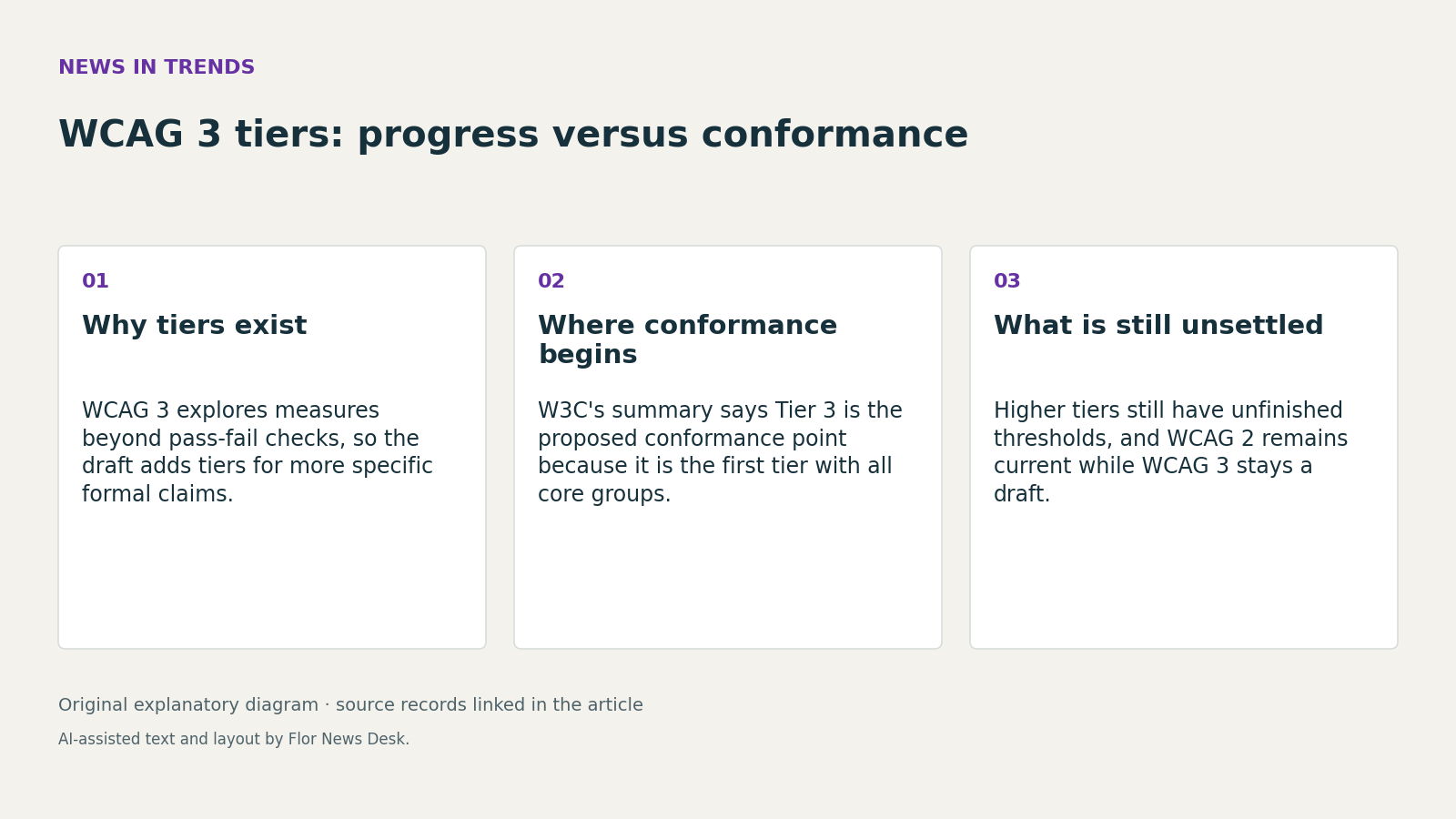
The central distinction is between reporting partial progress and meeting the draft’s proposed conformance threshold. W3C’s WAI summary says proposed WCAG 3 conformance requires meeting all core requirements. In that model, Tier 1 covers Physical harm and Risk, Tier 2 adds Barrier, and Tier 3 adds Friction, making Tier 3 the proposed conformance tier because it is the first tier that includes all core requirement groups. The available retrieved draft excerpt does not spell out those thresholds, so this tier breakdown comes from the WAI summary page rather than a detailed conformance section in the excerpted draft record. WAI introduction summary Working Draft
That structure makes more sense when read against W3C’s earlier design goals. A 2026-03-03 WCAG 3 requirements note says the group is exploring conformance approaches that can measure some accessibility guidance with methods beyond simple true-or-false statements. The same note says the conformance model should motivate organizations to go beyond minimum requirements and show which ones make greater accessibility efforts. Read together with the September draft, the tiers look less like a substitute for conformance and more like a way to describe how much of the proposed model a formal claim actually covers. Requirements for WCAG 3.0 Working Draft
This is why a progress tier can be useful without being marketed as completion. The draft’s abstract says tiers can reflect differences both in digital content and in the testing performed. The requirements note also says WCAG 3 is still exploring what the conformance scope might be, including web pages, websites, page sections, individual components, and author-defined task sets. Analysis: a tiered claim can tell readers more than a binary badge, but only if the claim stays explicit about what was tested and which proposed requirement groups are included. Otherwise, “Tier” risks sounding more definitive than the underlying proposal actually is. Working Draft Requirements for WCAG 3.0
The September material also does not support saying WCAG 3 has replaced WCAG 2. W3C’s summary says WCAG 2 remains the current standard and that WCAG 3 will not supersede it for several years after WCAG 3 is finalized. The Working Draft likewise says content conforming to WCAG 2.2 Level A and Level AA is only expected to meet most of the new standard’s minimum conformance level, with additional work still needed because WCAG 3 adds tests and uses different scoring mechanics. That makes the draft a proposed next model, not a current settled target. WAI introduction summary Working Draft
There is another reason to read the tiers cautiously. The WAI summary says proposed Tiers 4 to 6 would sit above conformance by adding supplemental requirements and assertions, but some required amounts are still to be determined. And the March requirements note is a work in progress about intended design outcomes, including possible use in law, regulation, or policy, not evidence that any government, buyer, or platform has adopted the September model. WAI introduction summary Requirements for WCAG 3.0
As of 2026-09-21, the practical takeaway is narrow but useful. W3C has proposed a vocabulary for reporting accessibility progress without automatically calling that progress conformance, and it is inviting feedback on that approach. For readers assessing public claims, the key question is not whether an organization says it is using WCAG 3, but whether it is describing a lower reporting tier, the proposed Tier 3 conformance threshold, or an above-conformance tier whose details remain unfinished in the draft. WAI introduction summary Working Draft