
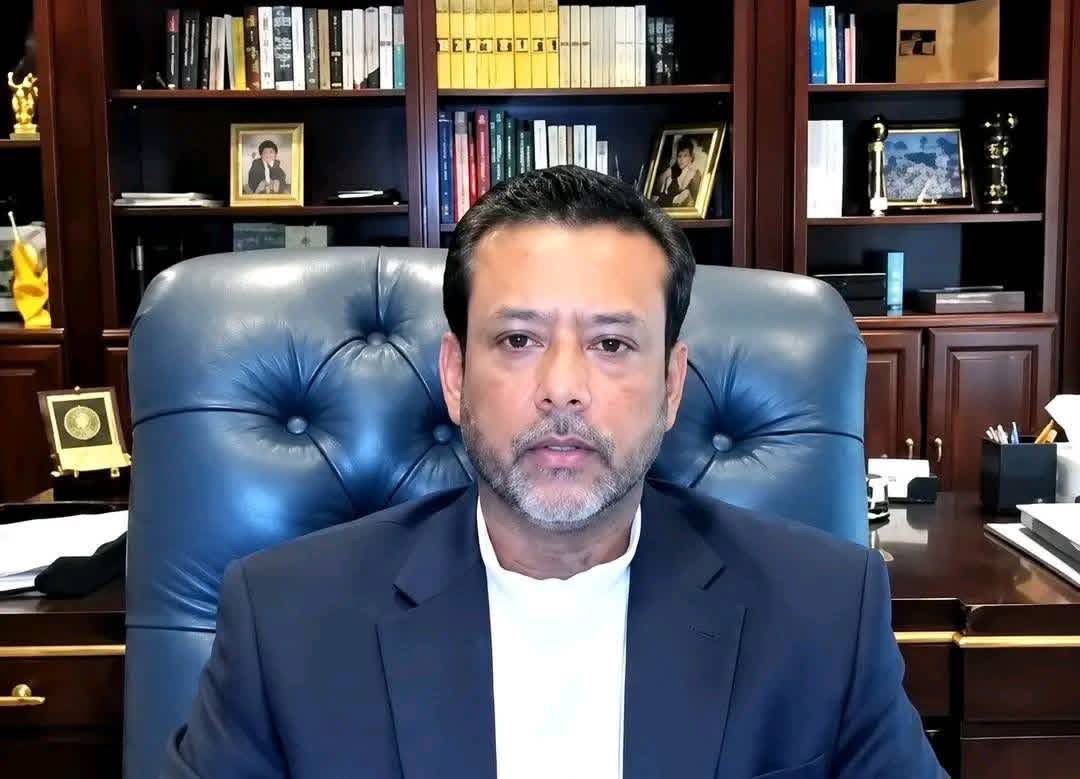
Sajeeb Wazed Joy has urged Western governments to speak out over political detentions and the exclusion of the Awami League in Bangladesh, warning that continued silence could deepen instability and threaten their own interests.
Joy, the son and former adviser of ousted prime minister Sheikh Hasina, addressed a London seminar by video link on September 29. The Global Centre for Democratic Governance organised the event at One Great George Street under the theme of safeguarding democracy, rights and the rule of law in Bangladesh.
He accused Britain and other Western governments of overlooking abuses while pursuing commercial relationships. He alleged that politicians and journalists had been detained for prolonged periods without due process, and challenged the legitimacy of an election that excluded his party.
His remarks ranged across developments since Hasina’s fall in August 2024. Bangladesh is now led by Prime Minister Tarique Rahman, who took office on February 17 after his Bangladesh Nationalist Party won the election, ending Muhammad Yunus’s interim administration.
Political participation and detention
The interim government prohibited Awami League activities in May 2025, pending proceedings before the International Crimes Tribunal over the suppression of the 2024 uprising. Authorities said the measure was intended to protect national security and people involved in the trials.
International observers reached a more favourable assessment of the February 2026 election than Joy. The Commonwealth’s final report found the process peaceful, orderly and transparent, while acknowledging concerns linked to the Awami League’s exclusion. It also identified continuing risks to media freedom and shortcomings in political inclusion.
Independent rights organisations have nevertheless documented serious concerns. Human Rights Watch reported in July 2025 that many arrests of perceived Awami League supporters appeared arbitrary and politically motivated. It also noted that some forms of repression associated with Hasina’s rule, particularly widespread enforced disappearances, appeared to have ended.
Joy also blamed the army for five deaths during unrest in Gopalganj in July 2025. Human Rights Watch recorded five people killed in clashes involving security forces and Awami League supporters. At the time, the military said troops had acted in self-defence after warnings failed and personnel came under attack. Those accounts leave the circumstances and responsibility contested.
Economic and security warnings
Joy questioned Bangladesh’s ability to pay for aircraft and imported gas, and portrayed domestic investment as having stopped. Those assertions require qualification: the available evidence establishes economic pressure, but does not establish the sweeping payment failure he described.
Boeing announced on September 23 that Biman Bangladesh Airlines had ordered another 11 aircraft, bringing its orders this year to 25. The announcement confirms the purchases; it does not demonstrate either missed contractual payments or the country’s capacity to meet every future obligation.
Nor do published investment figures support a literal claim of zero domestic investment. The Centre for Policy Dialogue’s January 2026 economic review put private investment at 22.48 per cent of gross domestic product in the 2025 fiscal year, down from 23.96 per cent a year earlier.
The wider economic difficulties are substantial. In July, the International Monetary Fund highlighted fiscal constraints, banking-sector stress and inflation, projecting growth of 3.5 per cent in the 2027 fiscal year. It called for revenue and banking reforms to improve the outlook.
Joy ended by warning of renewed political confrontation and security risks, and urged Bangladeshis overseas to keep elected representatives informed and press them to defend human rights and democratic participation.
Read our editorial standards or send a correction to the editorial desk.